
Do Gas Fireplaces Need to Be Swept? Yes, Here's Why
The Most Common Misconception About Gas Fireplaces
One of the most persistent myths in home maintenance is that gas fireplaces do not need sweeping or professional maintenance. The reasoning seems logical on the surface: gas burns cleaner than wood, so there is no creosote to worry about. Many gas fireplace owners go years without scheduling a professional service call, assuming their system is maintenance-free.
This assumption is wrong, and it can be dangerous. Just like wood-burning fireplaces need annual sweeping, gas units require professional attention too.
The National Fire Protection Association (NFPA) Standard 211 is clear: chimneys, fireplaces, and vents shall be inspected at least once a year for soundness, freedom from deposits, and correct clearances. This recommendation applies to all fuel types, including natural gas and propane. The Chimney Safety Institute of America (CSIA) echoes this guidance, recommending annual inspection and service for gas fireplaces and their venting systems.
Why Gas Fireplaces Still Need Professional Service
Combustion Byproducts and Corrosion
Gas burns cleaner than wood, but it does not burn perfectly clean. The combustion of natural gas and propane produces water vapor, carbon dioxide, carbon monoxide, and small amounts of sulfur compounds. When these combustion gases cool as they travel up the chimney or through the venting system, the water vapor condenses. This condensation is slightly acidic due to the sulfur compounds and carbon dioxide dissolved in it.
Over time, this acidic condensation corrodes metal chimney liners, vent connectors, and other components of the venting system. In a traditional masonry chimney, the condensation can also attack mortar joints and clay flue tile from the inside — the same type of damage addressed by tuckpointing and masonry repair. This corrosion is not visible during normal use of the fireplace, and it progresses gradually over months and years. Only a professional inspection can detect the early stages of corrosion before it compromises the integrity of the venting system.
Debris, Nesting, and Blockages
A chimney flue connected to a gas fireplace is subject to the same environmental intrusions as any other chimney. Birds, squirrels, raccoons, and insects can enter an uncapped or improperly capped flue and build nests that partially or completely block the passage. Leaves, twigs, and other wind-blown debris can accumulate on the smoke shelf and in the flue.
A blocked or partially blocked flue prevents combustion gases from venting properly. When a gas fireplace operates with a restricted flue, carbon monoxide and other combustion byproducts can back up into the living space. Because carbon monoxide is odorless and colorless, occupants may not realize they are being exposed until symptoms develop.
The National Chimney Sweep Guild (NCSG) emphasizes that animal intrusion and debris accumulation are common causes of chimney blockage that affect all chimney types, regardless of fuel source.
Soot and Carbon Buildup
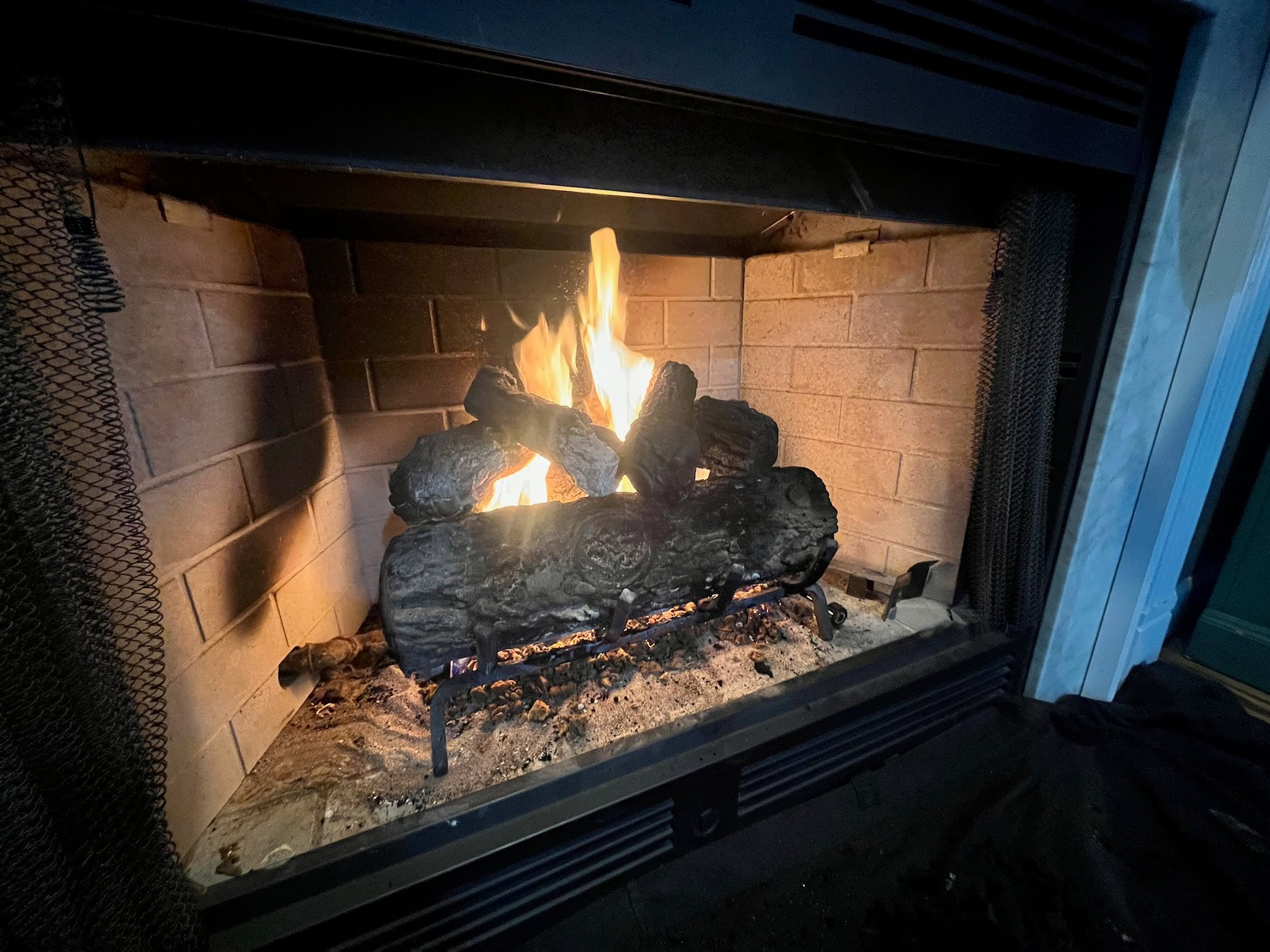
While gas produces far less soot than wood, it does produce some. Over years of use, a thin layer of carbon and soot accumulates on the interior of the flue, on the ceramic or refractory log set, on the burner assembly, and on the glass viewing panel. This buildup can affect the appearance of the flame, reduce the efficiency of the burner, and in sufficient quantities, restrict airflow through the system.
The glass front of a gas fireplace commonly develops a white or milky film caused by mineral deposits from the combustion gases. This film is normal but should be cleaned periodically with products specifically designed for gas fireplace glass. Improper cleaning with standard household glass cleaners can damage the tempered glass panel.
Component Wear and Failure
A gas fireplace contains several components that have finite lifespans and can fail with age:
- Thermocouples and thermopiles generate the small electrical current that keeps the gas valve open. When these sensors weaken, the fireplace may not stay lit or may fail to ignite.
- Gas valve assemblies regulate the flow of gas to the burner. Internal seals and diaphragms can degrade over time.
- Ignition systems, whether standing pilot, intermittent pilot, or electronic ignition, contain components that wear out with use.
- Blower motors in fireplace inserts and direct-vent units have bearings that wear over time and can become noisy or fail entirely.
An annual professional service call identifies aging or failing components before they cause a complete system failure on the coldest night of the year.
What a Professional Gas Fireplace Service Includes
A thorough annual service for a gas fireplace includes:
- Visual inspection of the firebox, burner assembly, log set, and glass panel
- Inspection of the venting system, including the flue, vent connector, and exterior termination
- Cleaning of the burner assembly and ports to ensure even flame distribution
- Cleaning of the glass panel using appropriate products
- Testing the ignition system and safety controls
- Checking gas connections for leaks
- Verifying proper draft and carbon monoxide levels during operation
- Inspecting the chimney cap or vent termination for damage, corrosion, and blockage
Carbon Monoxide Safety
Carbon monoxide exposure is the most serious safety risk associated with an improperly maintained gas fireplace. The NFPA reports that gas-fueled heating equipment is involved in a significant number of carbon monoxide incidents each year. Proper venting and annual professional inspection are the primary defenses against CO exposure from a gas fireplace.
Every home with a gas fireplace should have functioning carbon monoxide detectors on each level of the home and near sleeping areas. However, CO detectors are a backup safety measure, not a substitute for proper maintenance. The best protection is ensuring that the fireplace and its venting system are in sound condition and operating correctly.
Schedule Your Annual Gas Fireplace Service
If you have a gas fireplace that has not been professionally serviced in the past 12 months, schedule an appointment now. Do not assume that because it is gas, it does not need attention. Annual professional service keeps your gas fireplace safe, efficient, and ready to use throughout the heating season.
Friendly Fire LLC provides gas fireplace inspection and cleaning throughout the St. Louis metro area. Call (314) 322-7122 to schedule your service.
Frequently Asked Questions
How often should a gas fireplace be serviced?
Do gas fireplaces produce carbon monoxide?
Can I service my gas fireplace myself?
Need Chimney Service?
Friendly Fire serves the greater St. Louis area. Call us today or schedule online.