
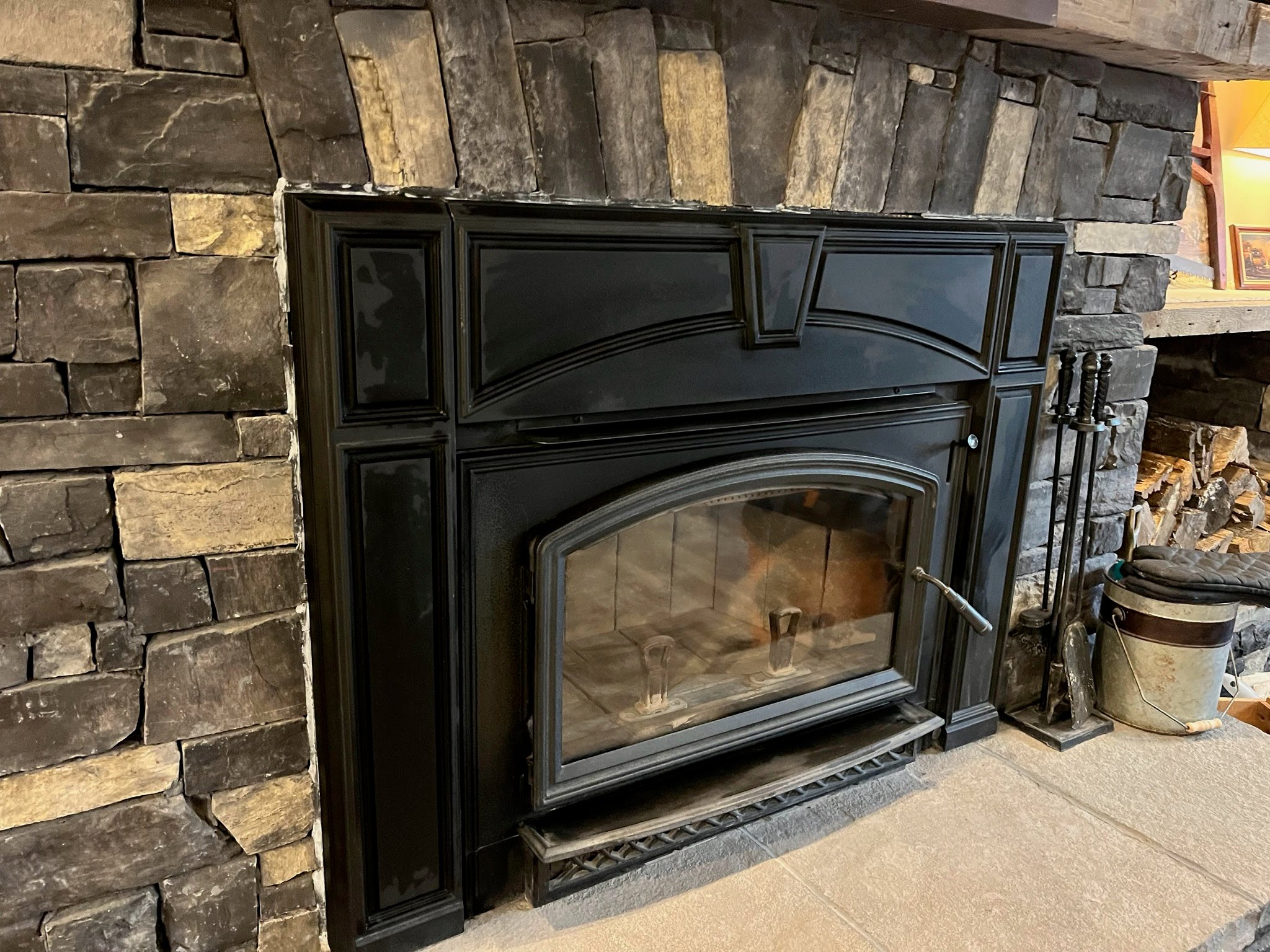
What Is a Fireplace Insert?
A fireplace insert is a self-contained heating unit designed to fit inside an existing masonry or factory-built fireplace opening. Unlike an open fireplace, where most of the heat escapes up the chimney, an insert is a sealed combustion system that captures and radiates heat into your living space. A properly installed insert connects to a stainless steel chimney liner that runs the full length of the flue, ensuring safe venting of combustion gases.
Open fireplaces are pleasant to look at, but they are remarkably inefficient as heat sources. According to the EPA, most traditional open fireplaces lose over 90 percent of the fire’s heat up the chimney. Worse, the strong draft created by the fire actually pulls heated air from other rooms and sends it up the chimney, meaning your open fireplace can make your home colder overall, not warmer.
A fireplace insert changes this equation dramatically. Modern inserts operate at 60 to 80 percent efficiency, delivering most of the heat they generate into your home rather than losing it up the flue.
Types of Fireplace Inserts
Wood-Burning Inserts
Wood-burning inserts are the closest to the traditional fireplace experience. They burn seasoned firewood or manufactured logs in a sealed firebox with adjustable air controls that regulate combustion. Modern EPA-certified wood-burning inserts produce far less smoke and particulate emissions than open fireplaces while delivering substantially more heat. They are a strong choice for homeowners who enjoy the look, sound, and smell of a real wood fire and have access to affordable firewood.
Gas Inserts
Gas inserts burn natural gas or propane and offer the greatest convenience. They light with a switch or remote control, produce consistent heat with adjustable flame settings, and require no firewood storage or ash cleanup. Gas inserts are available in a wide range of styles, from traditional log sets that closely resemble a wood fire to contemporary linear designs with glass media or river stones. For homeowners who want reliable supplemental heat with minimal maintenance, gas inserts are the most popular option.
Electric Inserts
Electric inserts use LED technology to simulate the appearance of flames without any actual combustion. They plug into a standard household outlet and produce heat using electric resistance coils. Electric inserts are the simplest to install since they require no chimney liner, gas line, or venting. However, they are best suited as decorative features rather than primary heat sources, as electric heating is typically more expensive per BTU than gas or wood.
Benefits of Installing a Fireplace Insert
Energy Efficiency and Cost Savings
The efficiency improvement from an open fireplace to a modern insert is substantial. By capturing heat that would otherwise escape up the chimney, an insert can meaningfully reduce your heating costs during the cold months. In the St. Louis area, where winter temperatures regularly drop below freezing, a fireplace insert used as a zone heating source can reduce the load on your primary furnace and lower your utility bills.
Increased Home Value
According to Redfin, homes with fireplaces are listed at approximately 13 percent more than the national median sale price, and listings with fireplaces average 733 views — ranking among the most-viewed home features on the platform. A 2016 Angi survey found that 77 percent of buyers would pay more for a home with a fireplace. In a competitive real estate market, a working, efficient fireplace is a feature that attracts buyers and adds tangible value.
Improved Safety
A sealed fireplace insert eliminates the risk of sparks or embers escaping the firebox and reaching your carpet, furniture, or flooring. The sealed combustion system also reduces the chance of carbon monoxide entering your living space compared to an open fireplace with a deteriorated flue.
The Installation Process
Installing a fireplace insert begins with a thorough inspection of your existing fireplace and chimney to determine the correct size and type of insert for your setup. Measurements are taken to ensure the insert fits properly within the firebox opening.
A stainless steel chimney liner is then installed from the insert connection at the bottom to the top of the chimney. This liner provides a properly sized and sealed pathway for exhaust gases and is a critical safety component of the installation. The insert is positioned in the fireplace opening, connected to the liner, and sealed to prevent air leakage. For gas inserts, a gas line is connected by a qualified professional.
After installation, the system is tested to verify proper operation, drafting, and safety. You receive instruction on how to operate and maintain your new insert.
Is a Fireplace Insert Right for You?
If you have an existing fireplace that you rarely use because it does not heat effectively, or if you are concerned about the safety and efficiency of your current setup, a fireplace insert is worth considering. The investment pays for itself through energy savings and increased home value, while providing reliable, safe supplemental heat throughout the heating season.
Friendly Fire LLC helps homeowners throughout the St. Louis metro area select and install the right fireplace insert for their home. Call (314) 322-7122 to discuss your options and schedule a consultation.