
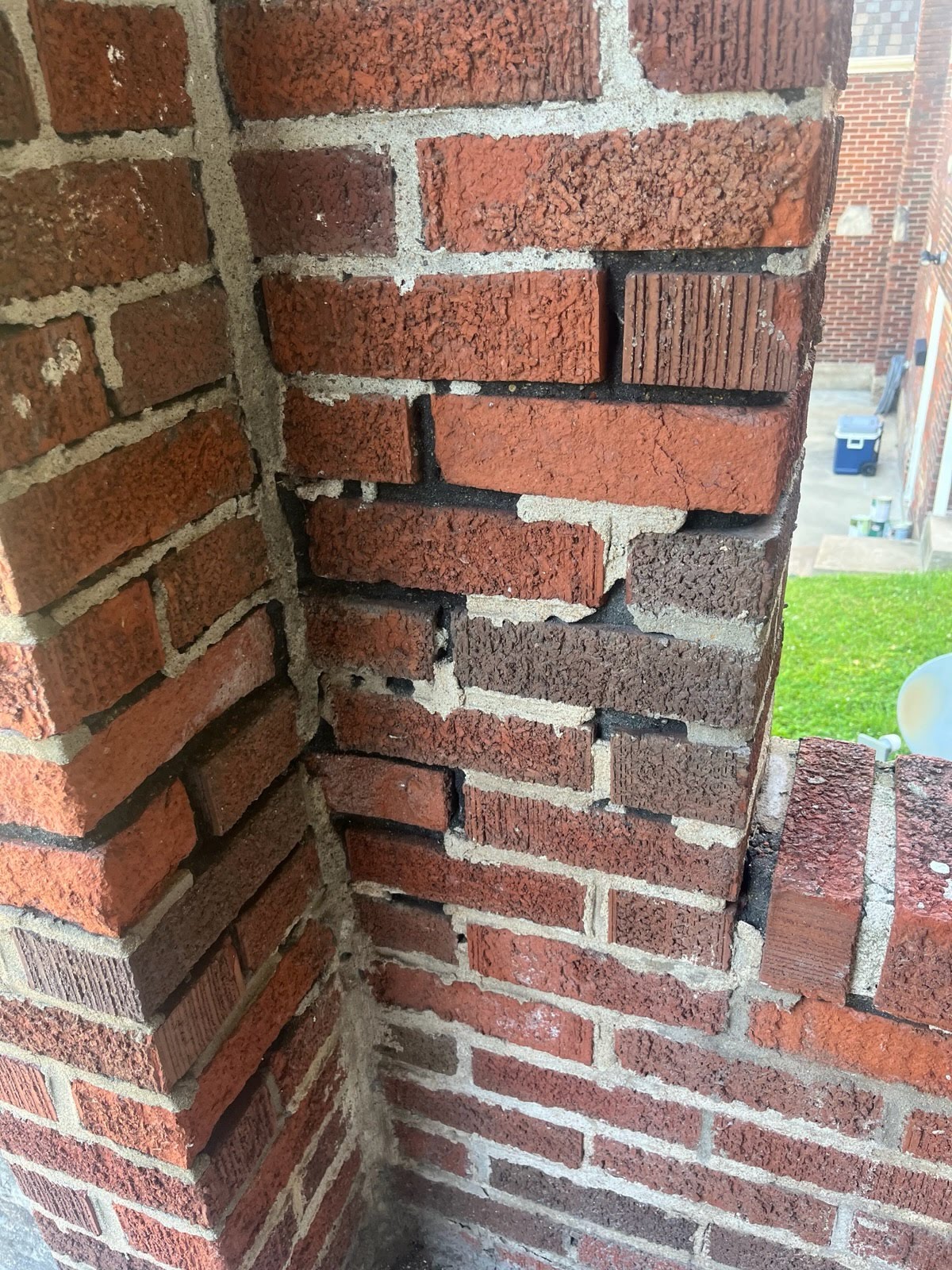
How Weather and Time Damage Your Chimney
Your chimney is the most exposed masonry structure on your home. It stands above the roofline, fully exposed to rain, snow, ice, wind, and direct sunlight on all four sides. Unlike the brick walls of your house, which are protected by eaves, gutters, and landscaping, your chimney absorbs the full force of every weather event throughout the year.
In the St. Louis metro area, this exposure is particularly punishing. Missouri’s climate produces dramatic temperature swings, with winter lows well below freezing and summer highs above 100 degrees Fahrenheit. The critical factor for masonry is the freeze-thaw cycle. Water enters small cracks and pores in mortar and brick. When temperatures drop below 32 degrees, that water freezes and expands by approximately 9 percent. The expansion forces the cracks slightly wider. When the ice thaws, more water enters the now-larger crack. Over dozens or hundreds of freeze-thaw cycles in a single winter, this process progressively breaks down even the best-laid mortar and the hardest brick.
The result is chimney masonry that deteriorates from the outside in, starting with the mortar joints and eventually affecting the bricks themselves.
Types of Chimney Masonry Repair
Tuckpointing
Tuckpointing is the most common chimney masonry repair. The process involves carefully grinding or raking out deteriorated mortar from the joints between bricks to a depth of approximately three-quarters of an inch, then filling the joints with fresh mortar that is matched in color and composition to the original.
Tuckpointing restores the weather seal between bricks, prevents water infiltration, and returns structural strength to the chimney. When performed before the damage extends to the bricks themselves, tuckpointing can extend the life of a chimney by decades at a fraction of the cost of a full rebuild.
Crown Repair and Replacement
The chimney crown is the cement or mortar cap that covers the top of the chimney structure around the flue liner. Its purpose is to shed water away from the flue and the chimney structure. Over time, crowns crack and deteriorate due to thermal expansion and contraction, freeze-thaw damage, and settling.
A cracked crown allows water to enter the chimney from the top, causing damage that works its way down through the entire structure. Minor crown cracks can be sealed with specialized crown coating products. Severely damaged crowns need to be removed and replaced with a properly constructed new crown, typically made from a Portland cement mixture with appropriate reinforcement.
Brick Replacement
When individual bricks have cracked, spalled (where the face of the brick flakes away), or deteriorated beyond repair, they need to be removed and replaced. Spalling is often caused by moisture trapped inside the brick that freezes and forces the outer face to pop off. Brick replacement involves carefully removing the damaged brick without disturbing the surrounding masonry, then setting a matching replacement brick with fresh mortar.
Chimney Rebuilds
In cases where deterioration is extensive, affecting large sections of the chimney structure, a partial or full rebuild may be necessary. A partial rebuild typically involves taking down the chimney from the roofline up and reconstructing it with new materials. A full rebuild extends below the roofline and may require access from inside the attic. Rebuilds are the most costly masonry repair, which is why catching deterioration early through regular inspection is so important.
Why Timely Repair Saves You Money
Masonry deterioration is progressive. A few cracked mortar joints left unrepaired for two or three years become a section of loose bricks. Loose bricks allow water deeper into the structure, accelerating damage to interior courses that you cannot see from the ground. What could have been resolved with targeted tuckpointing becomes a partial rebuild once the damage reaches the structural core.
The economics are straightforward. Tuckpointing a section of chimney typically costs a few hundred to a couple thousand dollars. A partial chimney rebuild can cost several thousand dollars or more. A full rebuild from the foundation up can reach into five figures. Every year of deferred maintenance increases the scope and cost of the eventual repair.
Signs Your Chimney Needs Masonry Repair
Walk around your home and look up at your chimney from ground level. You may be able to spot several warning signs without climbing onto the roof:
- White staining on the brick surface. This is called efflorescence, and it indicates that water is moving through the masonry and depositing mineral salts on the surface as it evaporates.
- Crumbling or missing mortar visible between the bricks.
- Cracks in the chimney crown visible from below, or pieces of crown material found on the roof or in the gutters.
- Pieces of brick or mortar on the roof, in the gutters, or on the ground near the base of the chimney.
- Leaning or tilting of the chimney structure.
- Water stains on the ceiling or walls near the chimney inside your home.
If you observe any of these signs, schedule an inspection promptly. Early intervention is the most cost-effective approach to chimney masonry problems.
Professional Masonry Repair in St. Louis
Friendly Fire LLC provides chimney masonry repair, tuckpointing, crown repair, and rebuilds throughout the St. Louis metro area. We serve homeowners within a 50-mile radius of Woodson Terrace, MO. Our team assesses the full extent of masonry damage before recommending repairs, so you get an honest evaluation and a clear understanding of what your chimney needs. Call (314) 322-7122 to schedule an assessment.